


God, the sovereign Creator of all things, made Earth and everything on it. All of it is woven to honor Him and declare His glory (Psalm 19:1, Isaiah 55:12, Revelation 5:13). He made Tonantzin Tlalli (a Nahuatl word meaning Our Sacred Mother Earth) to declare His glory, an aspect of who He is: the nurturer. She is a living being, and the Bible refers to her as a feminine being.
Psalm 19:1-The heavens declare the glory of God;
the skies proclaim the work of his hands.(NIV)2
Why do we call Earth Female?
The word for Earth (or ground) is eres (H127)3, a Hebrew feminine noun. I don’t think it’s by coincidence that Earth was deemed feminine throughout many cultures. Some honored her, while others worshipped her as a deity (albeit I do believe that Earth and the Earth deities that mimic her are not the same). In South America, the Quechua worshipped her as Pachamama. The Greeks called her Gaia, believing her to be the ancestral mother of all life. Among the Akan people, she was worshipped as Asase Ye/Asase Afua, the great female spirit of Earth.
When we denote her as mother, it isn’t to say she is our maker. The first human was born from her womb. The first Adam was born from the “womb” ground of Earth (Genesis 2:7, NIV), when she was still a “virgin,” pure of sin and defilement. Throughout all of the first chapters of Genesis, we see God forming her. He declares each formation as “good.”
Genesis 2:7-“Then the Lord God formed a man[a] from the dust of the ground and breathed into his nostrils the breath of life, and the man became a living being.”(NIV)3
The word for ground is adama(H127)4. It is also a hebrew feminine noun.
The Connection
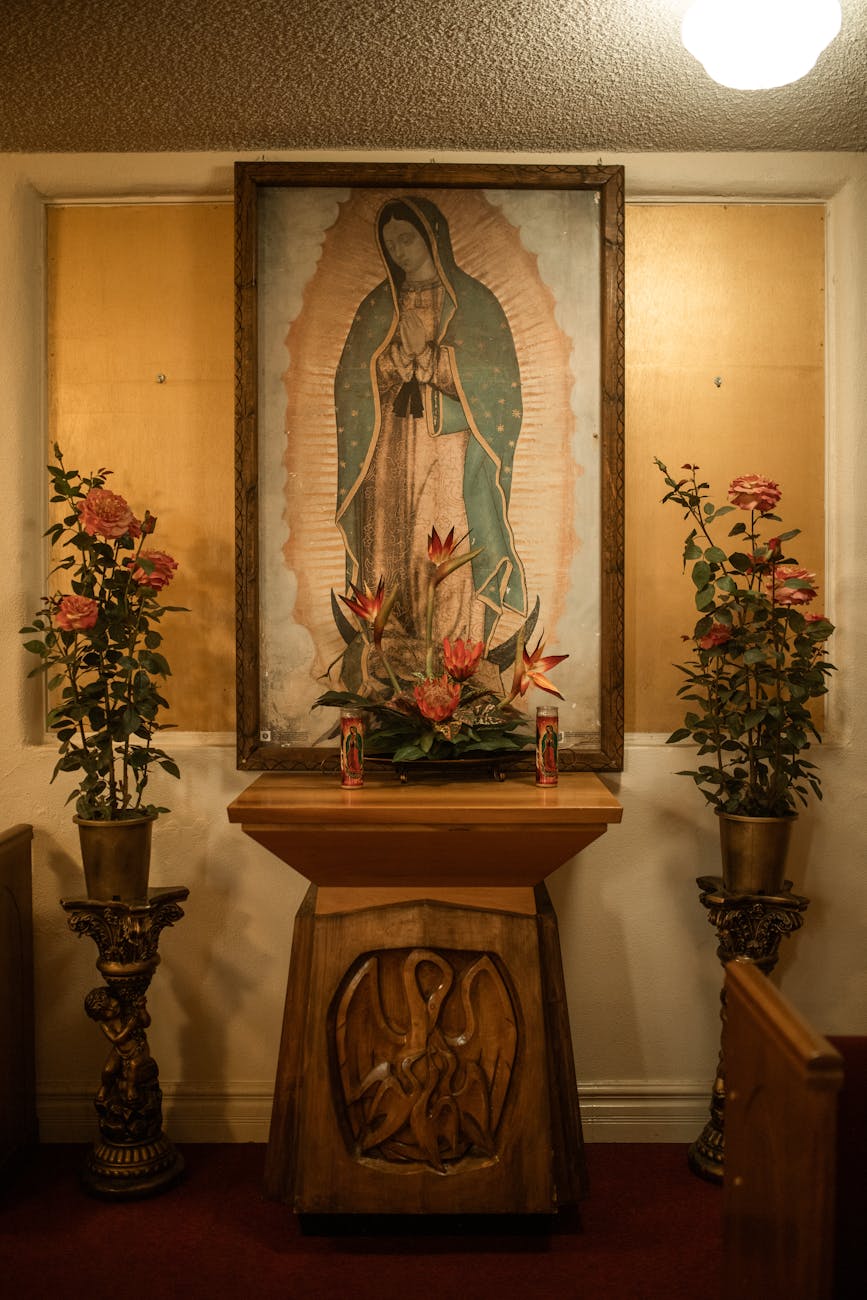
During the time I was a danzante, I was intrigued by the fact that Earth and the symbolism of the Virgen De Guadalupe, an apparition of Mary, the mother of Jesus, were synonymous. I would see banners depicting her, and sometimes written on the banners were “TONANTZIN TLALLI.” Even though many in danzante groups are not believers, whether they knew it or not, they understood something biblical.
The Spaniards forced Catholicism onto my Nahua ancestors. There is no denying that. While there is controversy among the historicity of the Juan Diego story, they still understood the Marian figure as something to be honored. Tonantzin is an honorific. Any of the female deities of our ancestral belief system could be called “Tonantzin.” In many Nahuatl-speaking pueblos, where there are Catholic Nahuas, it’s not uncommon to hear them say Tonantzin when referring to the apparition.

Jesus is the second Adam (1 Corinthians 15:45). When we read through scriptures and look at his interactions with his mother, we can begin to understand how we are to interact with Earth. While Jesus was born of a virgin, him being God in the flesh, he still had dominion over her. He still honored her as his mother, as God (the Father) commands us to, even up to the point of his crucifixion (John 19:25-27). He still put God and worship of Him first (Luke 2:49). Mary understood who she was carrying in her womb and still took care of him with that in mind (Luke 1:32, ESV).
Luke 1:32-33- He will be great and will be called the Son of the Most High. And the Lord God will give to him the throne of his father David, 33 and he will reign over the house of Jacob forever, and of his kingdom there will be no end.”(ESV)5
The relationship between Jesus and Mary is similar to the relationship we are to have with Earth. Many of us don’t take into consideration how we should take care of the land. All human beings descend from Adam and Eve. We are to take care of her as God commanded in the beginning. Things like littering, not being conscious of the materials we buy, or not taking more than what we actually need are some ways we can show obedience to the things God told us to do in that regard.
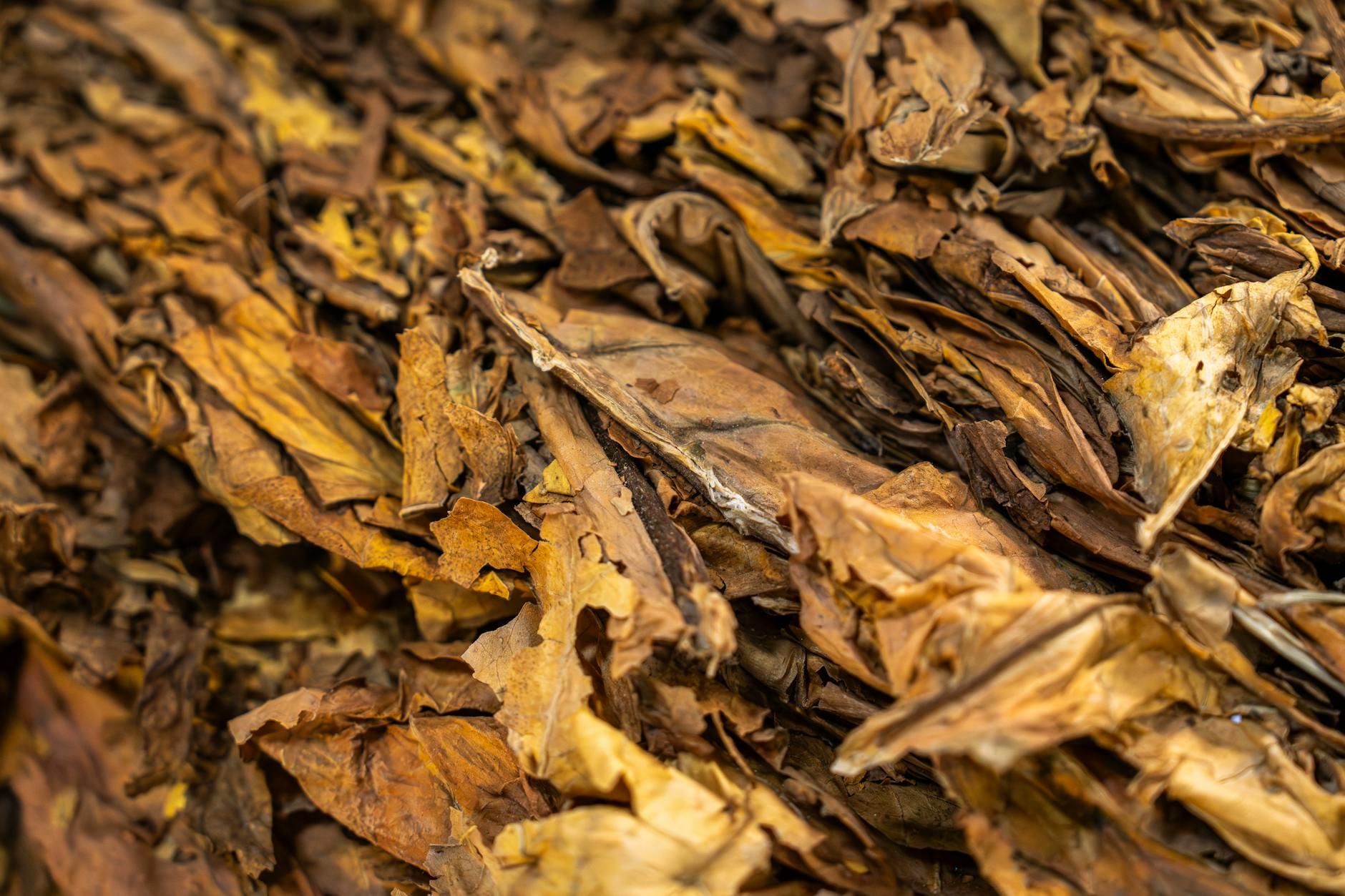
Many indigenous tribes, including my Nahua ancestors, understood this. My ancestors would leave offerings for her before taking or planting anything or cutting down trees. When I go outside and visit the streams, I place my hand in the water and give thanks to the Creator for the waters. I would also pray for its health and for the living and “nonliving” things that are within it. Then, I would burn incense or leave tobacco as a peace offering to YHWH.The Israelites had blessings for similar things. They had blessings for fruits, and veggies, for seeing the ocean,etc.
Like Mary, she worships and honors the master of the universe herself and is obedient to Him. Her entire body sings to Him. All things on Earth have a spirit that sings out and praises Him:
Psalm 66:4-All the earth bows down to you; they sing praise to you; they sing the praises of your name.” (NIV)6
Isaiah 44:23-Sing, O heavens, for the Lord has done it;
shout, O depths of the earth;
break forth into singing, O mountains,
O forest, and every tree in it!
For the Lord has redeemed Jacob,
and will be glorified[a] in Israel.(ESV)7
When you can, whether you are out on a trail, getting produce, or even cutting a tree down, give praise and thanks to the Creator for Earth and bless her for her servility to Him. For its all made by the work of His hands.
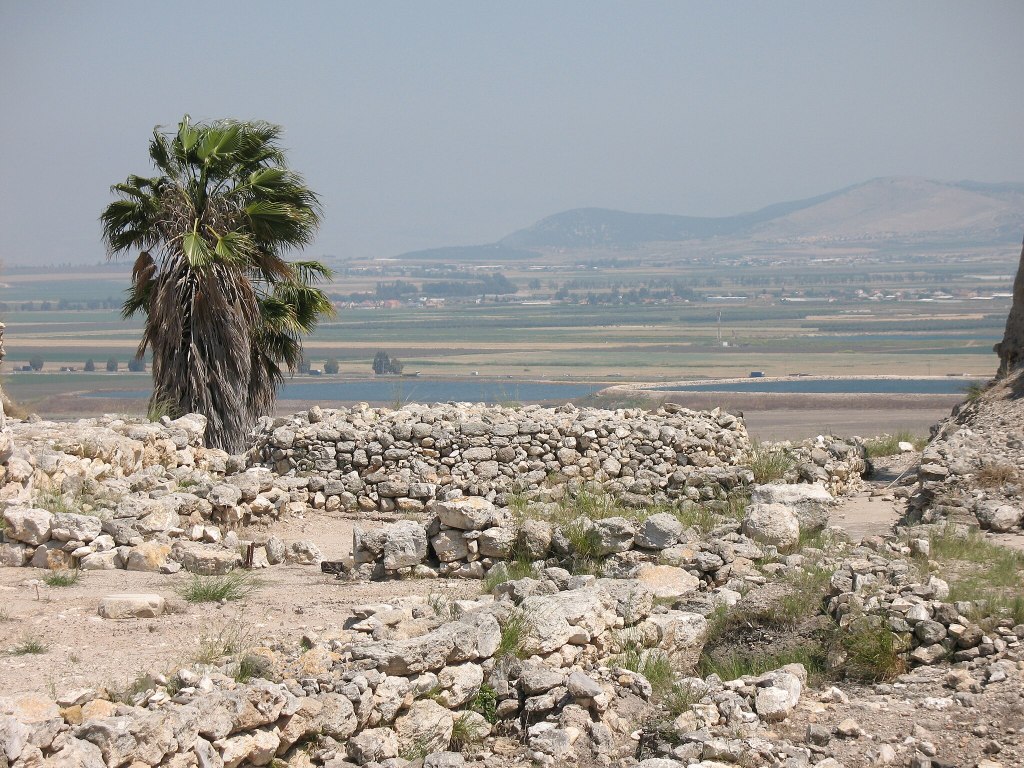
- Dennis G. Jarvis, CC BY-SA 2.0 https://creativecommons.org/licenses/by-sa/2.0, via Wikimedia Commons ↩︎
- The Bible. New International Version, Biblica, 2011, https://www.biblegateway.com/passage/?search=Psalm%2019%3A1&version=NIV. ↩︎
- The Bible. New International Version, Biblica, 2011, https://www.biblegateway.com/passage/?search=Genesis%202%3A7&version=NIV. ↩︎
- Blue Letter Bible. “Strong’s H127 – ‘ăḏāmâ.” Blue Letter Bible, https://www.blueletterbible.org/lexicon/h127/kjv/wlc/0-1/./ ↩︎
- The Holy Bible, English Standard Version. ESV® Text Edition: 2016, Crossway, 2001, https://www.biblegateway.com/passage/?search=Luke%201%3A32-33&version=ESV ↩︎
- The Holy Bible, New International Version. Biblica, 2011, https://www.biblegateway.com/passage/?search=Psalm%2066%3A4&version=NIV ↩︎
- The Holy Bible, English Standard Version. ESV® Text Edition: 2016, Crossway, 2001, https://www.biblegateway.com/passage/?search=Isaiah%2044%3A23&version=ESV ↩︎


 Musings of a Gentile
Leave a comment